
A steroid-free, non-greasy cream1
Formulated to take on Chronic Hand Eczema

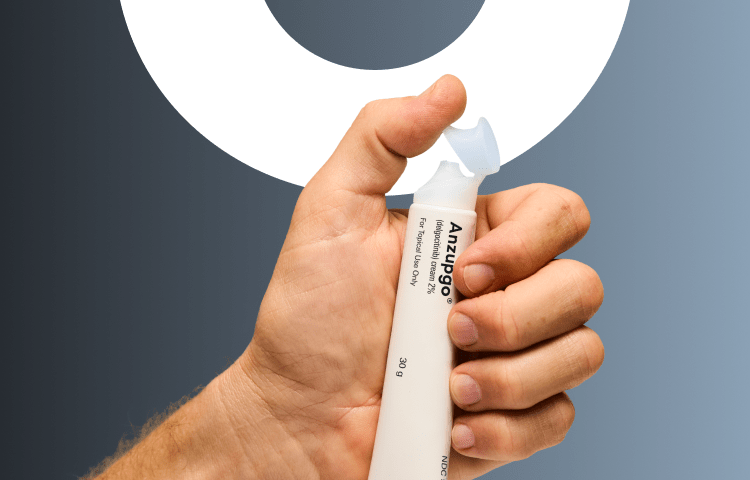
A steroid-free, non-greasy cream1
Formulated to take on Chronic Hand Eczema

No sensitizers or irritants known to commonly trigger CHE1,3,4

Formulated to minimize penetration-enhancing excipients1

Low systemic exposure1,5
Bioavailability of 0.6%
ANZUPGO can be used on affected areas 2x daily,
to treat Chronic Hand Eczema1
Do not use more than 30 grams per 2 weeks or 60 grams per month.
Across DELTA 1, 2 and DELTA 3 (open-label extension), 198 patients used ANZUPGO continuously for 52 weeks.1
to clean and dry skin
only on the hands and wrists
Before treating with ANZUPGO, ensure that patients have all age-appropriate vaccinations, including herpes zoster.
Avoid vaccination with live vaccines immediately prior to, during, and immediately after ANZUPGO treatment.
ANZUPGO is indicated for the topical treatment of moderate to severe chronic hand eczema (CHE) in adults who have had an inadequate response to, or for whom topical corticosteroids are not advisable.
Limitations of Use: Use of ANZUPGO in combination with other JAK inhibitors or potent immunosuppressants is not recommended.
WARNINGS AND PRECAUTIONS
Serious Infections: ANZUPGO may increase the risk of infections. Eczema herpeticum was observed in a subject treated with ANZUPGO. Serious and sometimes fatal infections have been reported in patients receiving oral or topical JAK inhibitors. Avoid use in patients with an active or serious infection. Consider risks and benefits before initiating ANZUPGO in patients with chronic or recurrent infection; tuberculosis exposure; history of serious or opportunistic infection; or underlying conditions that may predispose to infection. Monitor for signs and symptoms of infection during and after treatment. Interrupt ANZUPGO if a serious infection develops; do not resume until the infection resolves or is adequately treated.
Viral reactivation, including herpes virus reactivation (e.g., herpes zoster), was reported in clinical trials with ANZUPGO. If herpes zoster develops, consider interrupting ANZUPGO until the episode resolves. The impact of ANZUPGO on chronic viral hepatitis reactivation is unknown; consider viral hepatitis screening and monitoring per clinical guidelines before and during therapy. If signs of reactivation occur, consult a hepatitis specialist. ANZUPGO is not recommended in patients with active hepatitis B or C.
Non-melanoma Skin Cancers: Non-melanoma skin cancers, including basal cell carcinoma, have been reported. Periodic skin examinations of application sites are recommended for all patients, particularly for patients with risk factors for skin cancer. Advise patients to avoid sunlamps and minimize sunlight exposure.
Immunizations: Prior to ANZUPGO, complete all age-appropriate vaccinations per current immunization guidelines, including herpes zoster vaccinations. Avoid live vaccines immediately prior to, during, and immediately after ANZUPGO treatment.
Potential Risks Related to JAK Inhibition: It is not known whether ANZUPGO may be associated with the observed or potential adverse reactions of JAK inhibition. In a safety trial of an oral JAK inhibitor with methotrexate in RA, patients ≥50 years with ≥1 cardiovascular risk factor had higher rates of all-cause mortality (including sudden cardiovascular death), MACE, overall thrombosis, DVT, PE, and malignancies (excluding non-melanoma skin cancer) versus TNF blockers.
ANZUPGO is not indicated for use in rheumatoid arthritis (RA). Oral and topical JAK inhibitors have been associated with increased lipids (total cholesterol, LDL cholesterol, triglycerides). Oral JAK inhibitors have caused hypoglycemia in patients with diabetes.
Adverse Reactions
Adverse reactions reported in ≤1% of subjects were application site pain, paresthesia, pruritus, erythema, and bacterial skin infections, including finger cellulitis, paronychia, other skin infections, leukopenia, and neutropenia.
Use in specific populations
Lactation: To minimize potential infant exposure, advise breastfeeding women to avoid direct contact with the nipple and surrounding area immediately after applying ANZUPGO to the hands and/or wrists.
1. ANZUPGO. Prescribing information. LEO Pharma Inc. 2. Silverberg JI, et al. Am J Clin Dermatol. Published online February 8, 2026. doi:10.1007/s40257-026-01008-3 3. Weidinger S, et al. Lancet. 2024;404(10470):2476-2486. doi:10.1016/S0140-6736(24)01810-5 4. DeKoven JG, et al. Dermatitis. 2023;34(2):90-104. doi:10.1089/derm.2022.29017.jdk 5. Thaçi D, et al. J Eur Acad Dermatol Venereol. 2025;39(9):1612-1621. doi:10.1111/jdv.20777